What Size Carry-On Luggage Can You Take on a Plane?
Carry-on size depends on the airline and route. Measure your bag's full outside dimensions, including wheels and handles, then check your airline's current cabin limit.
On this page (11 sections)
- What is carry-on luggage size for most airlines?
- How should you measure a carry-on suitcase?
- How do carry-on rules change for international flights?
- Is carry-on size different from hand-luggage size?
- Can an airline make you check a carry-on that fits?
- What should you check besides carry-on dimensions?
- Which carry-on suitcase dimensions should you compare?
- What does a 20-inch or 22-inch suitcase label mean?
- How can you avoid a carry-on size surprise at the airport?
- More guides on this topic
- Which carry-on luggage size should you choose?
Carry-on luggage size depends on the airline and route. Measure the bag's full outside dimensions, including wheels and handles, then check the cabin limit for your specific flight.
A common US carry-on limit is 22 x 14 x 9 inches, but there is no single standard that applies to every airline. International carriers, fare types, and smaller aircraft can have different rules.
What is carry-on luggage size for most airlines?
Many US airlines use a maximum carry-on size near 22 x 14 x 9 inches. Treat that as a starting point, not a universal allowance, because each airline sets its own cabin rules.
Some carriers allow a larger bag, while others set a smaller limit or also restrict weight. A bag that fits one flight may be too large for another, especially when your trip includes multiple airlines or a regional aircraft.
For a specific carrier's limit, see our guide to Delta carry-on luggage size. Our overview of carry-on rules for airlines explains why it pays to check every carrier on your itinerary.
Is 22 x 14 x 9 inches the right carry-on size?
A bag measuring 22 x 14 x 9 inches is a useful target for many US flights. Confirm the airline's dimensions before buying or traveling, since limits can differ.
Airline dimension formats may list height, width, and depth in a different order. Compare the three measurements, regardless of order, and make sure none exceeds the stated maximum.
How should you measure a carry-on suitcase?
Measure the bag's outside height, width, and depth at the widest points. Include wheels, fixed handles, feet, and other parts that extend beyond the shell.
Stand the bag upright and measure from the floor to the topmost point. For width and depth, include anything that sticks out, such as side handles or wheel housings.
Measure an expandable suitcase with its expansion panel open if you plan to use it that way. The extra depth can push a bag beyond the airline's maximum even when the unexpanded case fits.
Do wheels and handles count in carry-on dimensions?
Usually, yes: check the airline's wording and count all parts of the bag in your measurement. A suitcase's shell dimensions alone can make it seem smaller than its total outside size.
Product names can call a case “20-inch” or “21-inch,” but those labels don't replace its complete measurements. Compare the full outside dimensions with the airline's stated limit.
For example, the Samsonite Omni PC has overall dimensions of 22 x 15 x 9.5 inches. Those measurements exceed a 22 x 14 x 9 inch limit in width and depth, so check your airline's allowance before choosing it.
If you need a tighter fit, compare the best small carry-on luggage with wheels. A smaller bag can leave more room for airline measurement differences, but the carrier's rules still decide.
How do carry-on rules change for international flights?
International carry-on limits vary by airline, itinerary, and fare. Check each operating carrier's rules, since a trip booked with one airline may include a flight operated by another.
Don't assume the same bag qualifies throughout a multi-leg journey. If one leg has a smaller allowance, that stricter limit may determine what you can bring for the whole trip.
See our guide to international flight carry-on luggage rules for a broader checklist. For an airline-by-airline comparison, start with best carry-on luggage for international travel.
What if your flight includes a connection?
Check the carry-on limits of every airline operating your flights. Look at the operating carrier's rules for each segment, especially when a connection uses a different airline or aircraft.
Save the rules somewhere accessible before leaving for the airport. If your bag exceeds a limit, you may need to check it or move items into a smaller personal item.
Is carry-on size different from hand-luggage size?
“Hand luggage” and “carry-on” usually refer to bags you bring into the aircraft cabin. The exact wording varies by airline and country, so follow the carrier's dimensions and bag allowance rather than the label alone.
An airline may allow one cabin bag and one smaller personal item, with separate size limits for each. Our guide to hand luggage vs carry-on explains how the terms are used.
Can an airline make you check a carry-on that fits?
Yes, an airline can require a bag to be checked when cabin space is limited or the bag doesn't meet its rules. A compliant size doesn't guarantee overhead-bin space on a full flight.
Review carry-on vs checked luggage to weigh your options.
Gate staff may ask you to check a bag before boarding. Keep medication, travel documents, valuables, and other items you need close at hand, following airline guidance for items that can't go in checked luggage.
What should you check besides carry-on dimensions?
Check the airline's weight limit, personal-item allowance, and any fare-specific rules as well as size. Requirements can also differ by route or aircraft.
Use this quick checklist before departure:
- Find the cabin-bag limit for each operating airline.
- Measure all three outside dimensions, including wheels and handles.
- Measure again with any expansion section open if you will use it.
- Check whether the airline sets a weight limit.
- Confirm whether your fare includes a cabin bag and personal item.
A dimension-compliant bag may still be unsuitable if it is too heavy under the carrier's rules. If weight matters, compare lightweight carry-on luggage.
A bag's size label doesn't confirm that it meets the airline's full allowance.
Which carry-on suitcase dimensions should you compare?
Compare complete outside measurements with the exact airline limit before choosing a suitcase. These examples show why the name or advertised inch size isn't enough.
The Samsonite Freeform is described with outside dimensions of 15 x 10 x 23 inches including wheels. Those measurements are larger than a 22 x 14 x 9 inch target, so check the size limit and measure the specific bag carefully.
If you're choosing between brands, our guide to American Tourister carry-on sizes can help you compare options. For a Delta trip, see carry-ons for Delta flights.
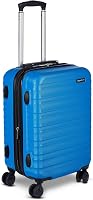
The Amazon Basics 21-inch case measures 14.8 x 10 x 21.7 inches, including wheels. Its width and depth exceed a 22 x 14 x 9 inch limit, even though its height is under 22 inches.
A “21-inch” or “20-inch” suitcase isn't automatically small enough for every airline. For a closer look at common suitcase labels, read is a 24-inch suitcase a carry-on?.
What does a 20-inch or 22-inch suitcase label mean?
The inch label often describes a suitcase size class, not the complete outside dimensions. Check the actual height, width, and depth before deciding whether it fits.
For another size class, see medium suitcase dimensions.
A 20-inch suitcase can still have wheels or handles that add to its height. A 22-inch case may also exceed the limit if it is wide or deep, or if it has an expansion panel.
If you already know which size class you want, compare best carry-on luggage measuring 22 x 14 x 9 inches, best 22-inch suitcases, or best 20-inch suitcases. For a hard-sided option, see best 20-inch hard-shell suitcases and best red 20-inch suitcases.
How can you avoid a carry-on size surprise at the airport?
Use the airline's current size limit and measure the packed bag before you leave. If the bag is close to the maximum, don't assume its soft sides or flexible corners will make it acceptable.
Keep the bag unexpanded if you need every inch of clearance. Check handles and wheels again, and leave a little room for measurement differences.
Review the airline's rules before each flight, even if you have traveled with the same suitcase before. For related travel planning, see our travel charger guide, portable charger rules for planes, and whether planes have chargers.
More guides on this topic
- Best Carry-On Luggage for Delta Flights
- Best Carry-On Luggage for International Travel
- Best Small Carry-On Luggage with Wheels
- What Are the Carry-On Luggage Rules for International Flights?
- What Are the Carry-On Rules for Airlines?
- Best Carry-On Luggage Measuring 22 x 14 x 9 Inches
- Best 22-Inch Suitcases
- Best 20-Inch Suitcases
- Best 20-Inch Hard Shell Suitcases
- Best Red 20-Inch Suitcases
Which carry-on luggage size should you choose?
For what is carry on luggage size, use the airline's limit as your final guide: choose a suitcase whose full outside dimensions fit, then check weight and fare rules. If your itinerary includes several airlines, follow the strictest cabin allowance you find.
A 22 x 14 x 9 inch bag is a common US target, while smaller dimensions can give you more room for variation. Before you fly, measure the case as packed and review the carrier's current carry-on rules.
Frequently asked questions
What is the standard carry-on luggage size?
There isn't one size accepted by every airline. A common US cabin limit is 22 x 14 x 9 inches, but airlines set their own rules and may count wheels and handles.
Check the airline's current carry-on dimensions for your specific flight before packing.
Do carry-on measurements include wheels and handles?
Yes, use the full outside height, width, and depth, including wheels, handles, and any parts that stick out. Measure the bag as you plan to take it, since an expansion section can increase its depth and affect whether it fits the airline's limit.
Is a 22 x 14 x 9 inch bag a carry-on?
It fits the commonly used US carry-on size, but that doesn't guarantee acceptance on every airline or route. Check the carrier's own size and weight limits, plus any restrictions for your fare, aircraft, or international itinerary.
Can a carry-on be too heavy even if it fits?
Yes. Some airlines set a carry-on weight limit in addition to size limits, while others focus on whether you can place the bag safely in the cabin.
Check both measurements and weight rules for your airline and route.