Travel Charger: The Complete Buying Guide
A travel charger can mean a USB wall charger, plug adapter, voltage converter or power bank. Match the type to your device and destination: a plug adapter changes the outlet shape, while a converter changes voltage.
On this page (11 sections)
- Travel Power: The Complete Buying Guide
- What kind of travel charger do you need?
- Does a travel plug adapter convert voltage?
- When do you need a travel voltage converter?
- How do you choose a USB travel charger?
- How many ports and watts should you pack?
- Should you bring a power bank on a trip?
- Can you charge devices on a plane?
- What should you check before buying a travel charger?
- Explore travel power by topic
- Which travel charger setup fits your trip?
Travel Power: The Complete Buying Guide
A travel charger may be a USB wall charger, plug adapter, voltage converter or power bank. Match the type to your devices and destination: a plug adapter changes outlet shape, but only a voltage converter changes electrical voltage.
For a phone or laptop, start by checking the input range printed on its charger. If it accepts 100–240V, you may only need a plug adapter for the destination; if it doesn't, check whether a suitable converter is available.
What kind of travel charger do you need?
Choose a travel charger by the job it needs to do: charge from a wall, fit a foreign outlet, convert voltage or supply power away from an outlet. These are different jobs, even when a single device combines some of them.
| Type | What it does | Check before you pack |
|---|---|---|
| USB wall charger | Charges devices from an outlet | Port type, output and total power |
| Plug adapter | Lets a plug fit a different outlet shape | Destination coverage and device plug |
| Voltage converter | Changes one voltage to another | Input and output voltage, wattage limit and appliance compatibility |
| Power bank | Stores power for charging away from an outlet | Capacity, charging ports and airline rules |
| Charging station or strip | Adds ports or outlets at a base | Voltage compatibility, plug type and permitted use |
A compact wall charger suits trips with regular access to outlets. A power bank helps when you expect long transfers or time away from a socket, while an adapter is useful when your plug does not fit the local outlet.
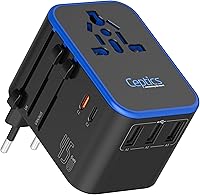
Before choosing an all-in-one unit, check which functions it actually provides. A multiport plug adapter may charge several USB devices, yet still leave voltage unchanged.
Does a travel plug adapter convert voltage?
No. A travel plug adapter changes the plug shape, not the voltage.
You still need to confirm that each connected device accepts the local electrical supply.
Look for an input range on the device or its power brick, often written as “100–240V, 50/60Hz.” A device marked for a limited voltage range may need a converter when traveling somewhere with a different supply.
Adapters also have limits on current and power. Check those limits for all connected devices, especially appliances that draw much more power than phones or tablets.
A universal adapter's country coverage matters too. “Universal” does not always mean every outlet type; for example, the EPICKA adapter covers over 200 countries and regions but excludes South Africa and India.
If your trip spans multiple plug systems, compare our best universal travel adapters. For destination-specific choices, see European travel plug adapters and travel plug adapters for Asia.
When do you need a travel voltage converter?
You need a travel voltage converter when your device cannot accept the voltage supplied at your destination. Check the device label before buying one; a plug adapter alone won't solve a voltage mismatch.
A converter's output must suit the device, and its wattage limit must meet or exceed the device's requirements. Some converters exclude high-power appliances such as hair dryers, kettles or irons, even if the plugs fit.
The FOVAL converter steps down voltage to 110V and is rated for equipment under 230W. Its instructions exclude hair dryers and electric heaters, so check the appliance and converter limits rather than assuming every device will work.
The BESTEK also steps down voltage to 110V and includes multiple outlets and USB ports. Its instructions exclude hair dryers, coffee machines, steam irons, kettles and juicers.
Don't buy a converter just because you're traveling internationally. Many phone and laptop power supplies accept a broad input range; check the label and use only the plug adapter needed for the destination.
See our travel voltage converter guide for help comparing converter types and limits.
How do you choose a USB travel charger?
Choose a USB travel charger with the right ports and enough output for the devices you plan to charge together. Check whether its stated power is shared across ports, since adding devices can reduce charging speed.
USB-C is common on newer phones, tablets and laptops, while USB-A may still fit older cables and accessories. If you carry both, a charger with both port types can reduce the number of wall plugs you pack.
For a laptop, check the charger's USB-C power output against the laptop's charging requirement. A small phone charger may connect but charge slowly or fail to keep up while the laptop is in use.
The charger also needs a compatible wall plug. Some compact USB chargers use a separate adapter, while an all-in-one travel charger includes sliding or interchangeable plugs.
If you want one charger for several devices, start with our best travel charger kits. For smaller or higher-output options, compare compact USB-C travel chargers, GaN travel chargers and 140W GaN travel chargers.
How many ports and watts should you pack?
Choose enough ports for the devices you expect to charge at the same time, then check the charger's total output. Port count alone does not tell you how quickly every device will charge.
Make a short device list before shopping: phone, laptop, watch, earbuds, camera and power bank. Note which ones can charge overnight and which need a faster top-up between activities.
A compact charger can work well for a phone and a small accessory. For a laptop or several devices, compare the rated output and how the charger allocates power when multiple ports are in use.
A charger with many ports can reduce outlet competition in a hotel room. A travel charging station may suit a bedside setup, while a power strip can add outlets if its voltage and travel use are appropriate.
Compare compact 65W USB-C chargers if you want a smaller charger, or compact USB-C laptop chargers for laptop charging. Samsung owners can see our travel chargers for Samsung phones, and Apple users can compare travel chargers for an iPhone and Watch.
Should you bring a power bank on a trip?
Bring a power bank if you'll need to charge away from a wall outlet. Pick capacity and ports around your trip length and devices, then check current airline rules before flying.
A power bank's capacity gives a broad sense of stored energy, but it doesn't guarantee a fixed number of phone charges. Your phone's battery size, charging losses and other connected devices affect how many top-ups you get.
A built-in cable or wireless charging can reduce what you carry, but confirm the connection works with your phone. If you plan to recharge the bank from a solar panel, treat that as backup unless the maker specifies otherwise; solar input can be slow.
The BLAVOR power bank has 10,000mAh capacity, USB-C input and output, wireless charging and built-in cables. Its solar panel is described as a backup charging method, with cable charging recommended as the primary method.
See our best travel power banks for iPhone or best 20,000mAh power banks to compare capacity options. For brand-specific picks, browse Anker travel power banks.
Can you charge devices on a plane?
Sometimes, but don't rely on an airplane seat for power. Aircraft may offer outlets or USB ports, but availability and compatibility can vary by plane and seat.
Check your airline's guidance for the aircraft and route, and bring a charged power bank if you need backup power. A power bank still needs to follow airline rules, including any battery capacity limits.
Keep the cable and charger easy to reach during the flight. For more detail, read whether there are chargers on planes and whether you can bring a portable charger on a plane.
What should you check before buying a travel charger?
Check device voltage, destination plug type, charger output and airline rules before choosing gear. These four checks prevent most mismatches.
- Read the input label on each device or power brick.
- Identify the outlet types used at every destination.
- Match charger ports and output to the devices you will charge.
- Check converter wattage and appliance exclusions if voltage conversion is needed.
- Review airline rules for power banks and spare batteries.
Also consider how you pack. A separate wall charger and adapter can be easier to replace, while an all-in-one unit may save space but combine more functions in one item.
For a cruise, check ship policies before packing a cruise ship power strip.
If you're comparing Anker options, see our guides to the best Anker chargers for travel, Anker chargers for international travel and Anker Nano chargers for travel. For phone-focused choices, start with phone chargers for travel, or see our guide to the best retractable charging cables.
Explore travel power by topic
- Best International Travel Chargers
- Best Travel Charging Stations for Multiple Devices
- Best Travel Power Strips with USB Ports
Which travel charger setup fits your trip?
Choose a USB wall charger for routine charging, add a plug adapter when the outlet shape differs, and use a converter only when a device cannot handle local voltage. Add a power bank for time away from outlets, and check airline rules before flying.
For a simple phone trip, prioritize a compact charger and compatible cable. For international travel with varied devices, check each device label and destination plug type before deciding whether you need an adapter or converter.
Frequently asked questions
Do I need a travel adapter or a voltage converter?
You need a plug adapter when your device's plug doesn't fit the destination outlet. You need a voltage converter only when the device cannot accept the local voltage.
Check the device label first; many phone and laptop chargers accept 100–240V, while an adapter by itself does not change voltage.
Can I use a travel charger in Europe?
You can use a travel charger in Europe if its plug fits the local outlet and its input rating supports the local voltage. A universal adapter can help with plug shape, but it does not convert voltage.
Check both the device label and adapter coverage for each destination.
Can I bring a power bank on a plane?
Power banks generally belong in carry-on baggage, but airline and aviation rules set limits and handling requirements. Check your airline's current guidance and the battery's capacity before flying.
Keep the power bank accessible, and don't assume a charger or outlet will be available on board.
What wattage travel charger should I get?
Choose a charger that meets the power needs of the device you plan to charge. A phone may need less output than a laptop, and a multiport charger may share its total output across connected devices.
Check the device's charging requirements and the charger's output for each port.
Can a universal travel adapter charge a hair dryer?
A universal travel adapter changes plug shape, not voltage, and its outlet may not support a high-power appliance. Check the appliance's voltage and wattage, then follow the adapter's limits.
Some travel adapters and converters specifically exclude hair dryers, so don't connect one unless the instructions allow it.