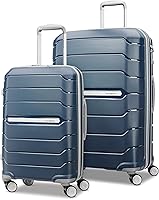
What Is the Weight Limit for Checked Luggage?
There is no single checked luggage weight limit for every flight. Many airlines set a standard limit around 50 lb for a checked bag, but the allowance depends on your airline, route, cabin, and fare.
On this page (8 sections)
- What is the usual weight for checked luggage?
- How do airline weight limits work?
- Does suitcase size affect its weight allowance?
- How do you weigh checked luggage at home?
- How much does an empty suitcase add?
- How can you stay under the checked baggage limit?
- What should you do if your checked bag is overweight?
- Which checked luggage should you choose?
There is no single weight limit for checked luggage across all airlines. Many carriers set a standard limit around 50 lb per bag, but your allowance can depend on your airline, route, cabin, and fare.
The key is to check the rules for your exact trip before packing. A bag can meet the size limit and still be too heavy, and the suitcase itself counts toward the total.
What is the usual weight for checked luggage?
A common checked bag limit is 50 lb, but it isn't universal. Some fares or routes allow more or less, and business or first class may have different baggage rules.
Look up the baggage allowance in your reservation or on your airline's official site. Check whether the rule applies to each bag, whether your ticket includes a checked bag, and whether connecting flights have different limits.
If you plan to check a box, see whether cardboard boxes can be checked as luggage.
Don't rely on a limit you remember from a past trip. Airline rules can vary between domestic and international routes, and between fare types on the same route.
How do airline weight limits work?
The limit usually applies to the packed bag at check-in. That means the suitcase, clothes, shoes, toiletries, and other contents all count toward its weight.
Some airlines also set a maximum weight that no bag may exceed, even if you pay an overweight fee. The exact fee and threshold depend on the carrier and itinerary, so check those details directly with the airline.
If two airlines operate different parts of your trip, confirm which baggage rules apply to each leg. Your booking confirmation may identify the operating carrier, which can help you find the right policy.
Does suitcase size affect its weight allowance?
Weight and size are separate limits. A bag can be under the weight allowance but exceed the airline's size rules, or fit within the size limit while weighing too much.
For size, airlines often measure the bag's outside dimensions, including wheels and handles. Our guide to what size checked luggage you should choose explains how to compare a suitcase with common size limits.
To measure a packed bag, include its widest points and protruding parts. See how to measure luggage for airline size and weight limits for a step-by-step sizing check, and learn what linear inches mean for checked luggage if your airline gives a combined dimension limit.
How do you weigh checked luggage at home?
Weigh the packed suitcase on a luggage scale or a reliable household scale before leaving. Add the items you plan to bring first, because the empty suitcase's weight is only part of the total.
With a handheld luggage scale, follow its instructions and lift the bag steadily. With a bathroom scale, weigh yourself, then weigh yourself holding the suitcase; subtract your body weight from the combined reading.
Check the result on a firm, level surface. If the bag is close to the limit, remove a little weight to leave a buffer for differences between scales at home and at the airport.
How much does an empty suitcase add?
An empty suitcase can use a meaningful part of your weight allowance. A lighter case leaves more room for packed items, while a heavier one may suit travelers who prioritize other features.
For example, the Samsonite Omni PC checked-medium weighs 8.34 lb and has overall dimensions of 26.5 x 17.75 x 11.75 in. Its polycarbonate shell and four spinner wheels are useful details to compare when choosing a checked bag.
The empty weight of a 20-inch suitcase can help you compare smaller cases. For a larger checked bag, include its own weight in your packing calculation before deciding how much to bring.
How can you stay under the checked baggage limit?
Start with your airline's allowance, then weigh the bag as you pack. Leave a small margin below the maximum so you aren't relying on two scales giving identical readings.
Put heavier items in a carry-on only if they are allowed there and your carry-on stays within its own limits. Our comparison of carry-on luggage vs checked luggage can help you decide what to keep with you.
If you frequently approach the limit, compare the empty weight of different suitcases before buying. The SwissGear Sion medium checked bag weighs 10 lb and expands for extra storage, so account for that base weight when estimating your packed total.
Expansion adds room, but it doesn't increase your airline's permitted weight. Weigh the bag again after using the expansion zipper because extra space can make it easy to pack more than planned.
What should you do if your checked bag is overweight?
Remove or redistribute items before check-in, while following each bag's allowance. Moving a heavy item to another suitcase only helps if that second bag remains within its own weight and size limits.
Wear a heavier jacket or shoes if that is comfortable and practical for your trip. Keep essential medication, documents, and valuables with you in line with your airline's carry-on rules.
If your suitcase is close to the limit before packing, a lighter option may help. The black SwissGear Sion medium also weighs 10 lb, with the same stated product dimensions as the dark grey version.
For bags that need to meet a combined size limit as well as a weight cap, compare checked luggage under 62 linear inches. Measure the whole case before choosing a model.
Which checked luggage should you choose?
Choose a bag by checking its empty weight, outside dimensions, and useful packing features against your route's rules. A lighter suitcase can leave more of the weight allowance for belongings, while extra capacity is only useful if you can keep the packed bag within the limit.
For more options, see our guides to best checked luggage bags and best checked luggage on sale. Compare the measurements and empty weights with your airline's current baggage policy before you choose.
Frequently asked questions
What is the usual weight limit for checked luggage?
Many airlines use a 50 lb limit for a standard checked bag, but the exact allowance varies by airline, route, cabin, and fare. Check your booking's baggage rules before packing, and confirm whether the limit applies to each bag or to your total allowance.
Is a 50 lb checked bag limit the same on every airline?
No. Fifty pounds is a common standard allowance, but airlines can set different limits by route, ticket type, cabin, or frequent-flyer status.
Your itinerary may also have separate rules for each flight, so verify every carrier if your trip includes a connection.
Does the empty suitcase count toward checked luggage weight?
Yes. The airline weighs the entire packed bag, including the suitcase itself, clothing, and everything inside.
Check the empty bag's weight before buying or packing, then leave room below your airline's limit for small differences between scales.
What happens if checked luggage is overweight?
An overweight bag may incur an extra fee, need repacking, or be refused, depending on the airline and route. Check the airline's current overweight rules before you travel.
If you are near the limit, move items to another bag only if that bag stays within its own allowance.