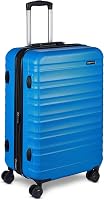
How Much Does an Empty 20-Inch Suitcase Weigh?
An empty 20 inch suitcase often weighs about 5 to 8 lb, though shell material, wheels, handles, and pockets can shift the total. Subtract the suitcase's empty weight from your airline's limit to estimate the allowance for packed contents.
On this page (7 sections)
- What is the empty weight of a 20-inch suitcase?
- How do you estimate the packing allowance?
- Which suitcase features affect empty weight?
- How much allowance remains in a few example cases?
- How can you keep the packed bag under the limit?
- What suitcase size should you compare with a 20-inch case?
- How much should an empty 20-inch suitcase weigh?
An empty 20-inch suitcase often weighs about 5 to 8 lb, depending on its shell, wheels, handle, frame, and pockets. To estimate your packing allowance, subtract the case's empty weight from the airline's weight limit.
For example, if your airline allows 22 lb and your suitcase weighs 6 lb, you have about 16 lb for clothes and other contents. Check the airline's current size and weight rules for your route, since limits vary.
What is the empty weight of a 20-inch suitcase?
A typical empty 20-inch suitcase weighs roughly 5 to 8 lb, but size alone doesn't determine its weight. Construction details such as a hard shell, a reinforced frame, spinner wheels, telescoping handles, and exterior pockets all contribute.
Treat that range as a starting point, not a specification for every case. Look up the weight of the exact model you plan to carry, and confirm whether its published dimensions include wheels and handles.
A 20-inch case may also be described by its exterior height, while another brand may refer to packing dimensions. For how a case opens and divides its interior, see what a clamshell suitcase is.
How do you estimate the packing allowance?
Subtract the empty suitcase weight from the airline's total weight limit. The result is the approximate weight available for everything inside the bag.
| Airline limit | Empty case | Approximate packing allowance |
|---|---|---|
| 22 lb | 5 lb | 17 lb |
| 22 lb | 6 lb | 16 lb |
| 22 lb | 8 lb | 14 lb |
| 26 lb | 6 lb | 20 lb |
These examples show the math, not a promise about any airline's allowance. Check the rule for your ticket and route, then weigh the fully packed suitcase on a luggage scale or household scale.
Count more than clothes: shoes, toiletries, chargers, books, and anything attached to the case add weight. If you're close to the limit, leave a margin for scale differences and last-minute items.
Which suitcase features affect empty weight?
Materials and parts influence empty weight more than the label “20-inch” does. A hard shell, soft fabric body, frame, handle system, wheels, pockets, and built-in locks can all change the total.
Hard-shell suitcases use a molded outer case, while softside bags use fabric and may have flexible outer pockets. Neither construction guarantees a lighter bag, so compare stated weights for similar sizes.
Wheels and handles are part of the bag you'll lift and roll. A manufacturer may report one weight for the whole suitcase, while dimensions can be shown both with and without those parts.
Is a hard-shell or softside suitcase lighter?
There is no universal winner: compare the weights of the specific models you are considering. A light hard shell may weigh less than a softside case with a larger frame or more pockets.
The best lightweight softside luggage guide can help if flexible fabric and outside pockets suit your packing style. If you want a molded shell, compare best 20-inch hard-shell suitcases and check each case's published weight.
The Samsonite Freeform carry-on is a hard-shell example with a listed weight of 6.5 lb and overall dimensions of 21.25 x 15.25 x 10 in. Its stated size may be useful for comparison, but check the dimensions and weight rules that apply to your trip.
How much allowance remains in a few example cases?
The remaining allowance is the airline's limit minus the empty case weight. Use these examples to plan, then replace the sample numbers with your airline's limit and your suitcase's actual weight.
A 20-inch suitcase that weighs 5 lb leaves 17 lb under a 22 lb limit. At 8 lb empty, that same limit leaves 14 lb.
A 6 lb case leaves 20 lb under a 26 lb limit. A 9 lb case leaves 17 lb under that limit.
The SwissGear Sion is a larger checked case, not a 20-inch suitcase, but its stated weight of 11.1 lb shows why dimensions matter when comparing weights. Its polyester softside design has front pockets and expandable storage.
Use packing dimensions to understand interior space and overall dimensions to compare the outside size. The best lightweight luggage bags guide offers more options if reducing the case's share of your weight allowance is a priority.
How can you keep the packed bag under the limit?
Start by weighing the empty case, then add items in groups and check the total as you pack. This makes it easier to spot where weight is accumulating before the bag is full.
- Pack heavy items you need in the suitcase near the wheels for easier handling.
- Choose fewer shoes and wear the heaviest pair during travel when practical.
- Use travel-size toiletries and avoid packing full containers you may not need.
- Leave room for purchases or items you'll add later.
- Weigh the complete bag and keep some space below the limit.
Don't rely on a suitcase's advertised capacity to judge its weight. A roomy bag can hold more than the airline allows, so the packed weight still matters.
The Samsonite Freeform large checked case has a stated weight of 9.5 lb and overall dimensions of 29.8 x 20.5 x 13 in. Since it is a large checked case, use it to compare construction and weight, not as a 20-inch carry-on substitute.
What suitcase size should you compare with a 20-inch case?
Compare the full outside measurements and empty weights of cases that fit your trip. If you need more packing space, a slightly larger case may add room, but it can also weigh more and may not meet carry-on limits.
A 22-inch suitcase comparison can help if you are deciding whether to size up. For a broader look at lighter options, compare best lightweight carry-on luggage and best lightweight luggage sets.
Check whether a set's cases have different weights and sizes rather than assuming every piece suits the same trip. Use the individual case dimensions and your airline's rules to decide which piece to take.
How much should an empty 20-inch suitcase weigh?
For an empty 20-inch suitcase, about 5 to 8 lb is a useful estimate, but the exact model weight matters for planning. Choose a lighter case if your airline limit is tight, then subtract that case's weight from the limit and weigh it again after packing.
If you need more room, compare a 22-inch case and confirm that its dimensions still fit your travel rules. For a lighter carry-on shortlist, use the best lightweight carry-on luggage guide.
Frequently asked questions
How much does an empty 20-inch suitcase weigh?
A 20-inch suitcase often weighs about 5 to 8 lb empty, but the exact figure depends on its shell, frame, wheels, handle, and pockets. Check the manufacturer's weight for the specific model, then weigh the packed case if you need to stay under an airline limit.
How do I calculate packing allowance?
Subtract the suitcase's empty weight from the airline's total bag limit. If the limit is 22 lb and the case weighs 6 lb, the remaining allowance is about 16 lb for everything packed inside.
Reweigh the complete bag because accessories and scale differences can affect the result.
Does a hard-shell suitcase weigh more than a softside one?
Not always. Weight depends on the materials and construction of each model, and a hard shell can be light while a softside case can include a sturdy frame, multiple pockets, and other weight.
Compare the actual weights for cases of similar size.
Does suitcase size include wheels and handles?
It depends on how the brand reports dimensions. Some give packing dimensions and overall dimensions that include wheels and handles.
Check both before buying, since airlines may measure the full outside size while interior dimensions describe usable packing space.