What Are the Dimensions for Underseat Luggage?
Underseat luggage is often about 18 x 14 x 8 in or smaller, but there is no single size that fits every airline seat. Check your airline’s personal item limit and measure the bag with wheels and handles.
On this page (8 sections)
- What are the usual dimensions for underseat luggage?
- How do you measure an underseat bag?
- Why can the space under the seat vary?
- Does an underseat bag count as a personal item?
- Which underseat dimensions should you check before a flight?
- How much smaller than the limit should your bag be?
- What should you do if your bag is too large?
- How do you choose the right underseat dimensions?
Underseat luggage is often about 18 x 14 x 8 in or smaller, but no single set of dimensions fits every airline seat. Check your airline’s personal item limit and measure the bag with wheels, handles, and pockets included.
Usable space can change with the aircraft, seat layout, and obstructions beneath the seat. A bag that fits one flight may be too large for another, so treat general size guidance as a starting point.
What are the usual dimensions for underseat luggage?
About 18 x 14 x 8 in is a common target for underseat bags, though airline rules vary. Some carriers set different limits, and the available space can be smaller than the published maximum.
Check the allowance for your airline and itinerary before choosing a bag. If your trip involves more than one carrier, compare each carrier’s requirements and plan around the strictest limit.
A bag’s shape matters along with its measurements. A soft bag may compress somewhat, while a rigid or heavily packed bag cannot; wheels and projecting pockets can also make it harder to slide beneath a seat.
How do you measure an underseat bag?
Measure the bag’s full exterior height, length, and depth, including wheels, fixed handles, and outer pockets. Use the widest points rather than the main compartment alone.
Set the bag upright and measure from the floor of the wheel housing to its highest point. Then measure the longest side and the front-to-back depth, including anything that sticks out.
Airline measurement rules can differ, so compare like with like. For more on what counts in a suitcase measurement, see whether suitcase dimensions include wheels and handles.
Internal space and exterior size are different measurements. If you want to compare usable packing room, learn how to calculate luggage volume from internal dimensions.
Why can the space under the seat vary?
The space under your seat depends on the aircraft and seat layout, so the airline’s maximum dimensions don't guarantee that every bag will fit every seat. Supports, seat frames, and other fixed structures can reduce usable floor space.
The bag may also need to slide in at an angle or fit around the seat in front. A wide bag can be awkward even when its total volume is modest.
Keep essentials you may need during the flight in a smaller pouch near the top of the bag. That way, you can reach them without pulling the whole case out.
Does an underseat bag count as a personal item?
An underseat bag counts as a personal item only when it meets your airline’s rules. “Underseat” describes where a bag is meant to go; “personal item” describes a baggage allowance.
Some tickets or carriers may have different allowances. Read the rules attached to your specific booking, including any limits on the number of items and where they must be stowed.
For a closer look at the distinction, read is underseat luggage a personal item. If you need a bag that works as a small carry-on, compare best underseat carry-on luggage.
Which underseat dimensions should you check before a flight?
Compare all three exterior dimensions with the current airline limit, then consider whether the bag can fit the space beneath your assigned seat. Don't rely on a bag label or a single measurement such as height.
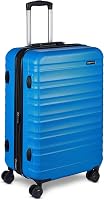
The Amazon Basics Underseat Carry-On measures 13.4 x 14.2 x 9.5 in, including wheels. Its depth is greater than an 8 in target, so compare that full measurement with your airline’s rules before choosing it.
The TPRC 15" Smart Underseat Carry-On measures 14 in high, 15 in long, and 8 in deep. TPRC says it fits under seats on several major airlines, while also advising travelers to check the size guide because space varies by aircraft.
The Travelpro Maxlite 5 Softside Lightweight Underseat Carry-On is a tote with dimensions of 11 x 18 x 8 in and a weight of 1.6 lb. Its listed shape and dimensions may suit travelers comparing a soft tote with a rolling bag.
For other compact options, see best lightweight underseat luggage and best Samsonite underseat luggage.
How much smaller than the limit should your bag be?
Leave some room below the airline’s maximum when you can, especially if the bag is rigid or packed full. A small buffer can make it easier to place the bag beneath a seat with supports or a narrow opening.
Don't assume a soft bag will always compress enough to fit. Bulky contents can make it firm, and packed side pockets add width or depth.
If a bag is close to the size limit, check the manufacturer’s exterior measurements and inspect the bag’s shape. A few inches in the wrong direction can matter more than total capacity.
What should you do if your bag is too large?
Choose a smaller bag or use the carry-on allowance if the bag exceeds your personal item limit. Don't count on being able to force it beneath the seat.
A larger carry-on may fit in an overhead bin if your ticket and airline rules allow it. Review best lightweight luggage for seniors if low weight is a priority, or compare best underseat luggage on sale when you’re ready to shop.
How do you choose the right underseat dimensions?
For underseat luggage dimensions, start with the airline’s current limit, measure the full exterior, and allow for the seat’s usable space. Check all three dimensions and include wheels, handles, and pockets in your comparison.
Choose a smaller bag if the flight has a strict personal item limit or you want more room to maneuver beneath the seat. If your bag is near the limit, verify its size against the rules for every carrier on your itinerary.
Frequently asked questions
What are the standard dimensions for underseat luggage?
A common target is about 18 x 14 x 8 in or smaller, but airlines don't share one universal underseat size. Check the personal item rules for your airline and flight, then compare them with the bag's exterior dimensions, including wheels, handles, and pockets.
Do underseat luggage dimensions include wheels and handles?
They should, because wheels and fixed handles take up space even if a measurement chart separates them. Measure the bag at its widest and tallest points with those parts included, and check how the airline defines its limit before you travel.
Will a 15-inch bag fit under an airplane seat?
It may fit on some aircraft, but a 15-inch height alone can't confirm fit. The bag's length and depth, wheel shape, seat supports, and available floor space all matter; compare all three exterior dimensions with your airline's limit.
Is underseat luggage the same as a personal item?
Underseat luggage is a bag designed to go beneath the seat, while a personal item is an airline baggage allowance. A bag may work as a personal item only if it fits that airline's size rules and the usable space on your aircraft.