What to Pack in a Toiletry Bag
Toiletry bag essentials include daily hygiene items, grooming tools, skin care, medicines, and trip-specific supplies. Pack only what you need for the trip length, and separate wet items from dry ones.
On this page (9 sections)
- What are the basic toiletry bag essentials?
- How should you pack toiletries for a weekend?
- What should you pack for a one-week trip?
- How do you separate wet and dry toiletries?
- What changes for family or outdoor travel?
- How do you pack toiletries for air travel?
- How do you choose the right toiletry bag size?
- How do you care for a toiletry bag after a trip?
- What is the simplest toiletry bag essentials checklist?
Toiletry bag essentials include your daily hygiene items, grooming tools, skin care, medicines, and trip-specific supplies. Pack based on the number of days away, then separate liquids from dry items so one leak does not spread through your luggage.
A short trip needs a small daily kit. A family holiday, outdoor trip, or long journey needs more capacity and better separation, especially if several people share one bag.
What are the basic toiletry bag essentials?
Start with the items you use every day. Your core toiletry bag essentials usually include a toothbrush, toothpaste, deodorant, soap or body wash, shampoo, skin care, hair care, and any personal hygiene products.
For product options, see toiletry bags for women.
Use this basic checklist:
- Toothbrush and toothpaste
- Deodorant
- Face wash and moisturizer
- Shampoo and conditioner
- Soap or body wash
- Razor and shaving supplies
- Hairbrush, comb, or hair ties
- Sunscreen
- Lip balm
- Contact lenses, solution, and glasses if needed
- Medicines and first-aid items
- Menstrual care products
- Hand sanitizer and tissues
You don't need every item on every trip. For a one-night stay, take the amount you need for the night and following morning instead of packing full-size containers.
A travel toiletry bag with separate pockets can make this daily kit easier to sort. Keep the items you use at the sink in one section and less-used supplies in another.
How should you pack toiletries for a weekend?
For a weekend, pack small amounts of your regular products and keep one backup for anything essential. A three-day kit should be compact enough to fit beside clothing without taking over your luggage.
Use travel containers for shampoo, conditioner, body wash, and lotion when you don't need full-size bottles. Label containers if you decant products, and don't combine products that look alike.
Pack your toothbrush and toothpaste where you can reach them quickly. If you arrive late, you won't need to unpack the whole suitcase to brush your teeth.
A compact kit also suits a gym shower or overnight stay. A hanging bag can be useful when counter space is limited, but a simple pouch may be easier to store inside a small personal bag.
Which toiletry bag essentials need special protection?
Leak-prone liquids, glass containers, razors, and medicines need extra care. Put caps on tightly, wipe bottle threads clean, and keep sharp tools covered or placed where they cannot damage other items.
Separate wet and dry supplies after use. Let a damp washcloth or reusable item dry before closing the bag for a long period.
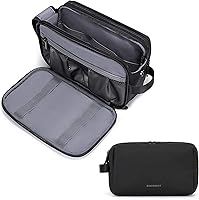
The BAGSMART Large Toiletry Bag Travel Bag has a water-resistant polyester peach skin material, 4 separate compartments with zippers, a back open pocket, and elastic straps that hold bottles upright.
Its rolled dimensions are 12.6 x 9.1 x 4.3 inches, and it opens to 12.6 x 33.5 inches. The transparent sides help you see contents, while the double zipper compartment gives access without fully opening the bag.
Choose this style if you carry several bottles or share toiletries with family members. Its larger shape may be more than you need for a solo weekend with only a few small containers.
What should you pack for a one-week trip?
A one-week toiletry kit should cover your daily routine without carrying a full bathroom cabinet. Estimate how much shampoo, skin care, and other liquid products you use each day, then add a small margin for delays.
Build the kit in groups:
- Daily hygiene: toothbrush, toothpaste, deodorant, soap, and body wash.
- Hair care: shampoo, conditioner, brush, comb, and ties.
- Skin care: cleanser, moisturizer, sunscreen, and lip balm.
- Grooming: razor, shaving supplies, nail clippers, and tweezers.
- Health: medicines, contact supplies, and basic first-aid items.
- Personal care: menstrual products, cosmetics, or other daily needs.
Keep the most important items together in case your checked luggage is delayed. Medicines and irreplaceable personal supplies should stay where you can access them during transit, subject to the rules for your route.
For air travel, check the current TSA liquids guidance before packing. Airport rules and international requirements can differ, so confirm the guidance for the airport and country you will use.
How do you separate wet and dry toiletries?
Use separate sections for wet and dry items, and place leak-prone containers where you can inspect them quickly. A waterproof or water-resistant pocket helps contain splashes, but it does not make an open bottle safe.
Dry items include toothbrushes, combs, cotton swabs, makeup tools, and hair ties. Wet items include shampoo, cleanser, lotion, toothpaste, and products used in the shower.
The BAGSMART Toiletry Bag for Men has a water-resistant polyester construction, a spacious main compartment with elastic bottle straps, and a front waterproof pocket for separating wet and dry items.
This model measures 10.6 x 3.9 x 6.7 inches and weighs 9.9 ounces. It has a double zipper design, multiple interior pockets, and a back pocket with an elastic band and zippered pockets.
Its black, minimalist design suits a simple personal kit, while the medium size may feel tight if several people share one bag. The product is described for adult men, but the compartments can also organize general grooming supplies.
What changes for family or outdoor travel?
Family trips need more separation and capacity than a solo overnight bag. Give each person a small group of supplies, or divide shared items from personal items so the bag is easier to unpack.
For outdoor travel, add sunscreen, insect protection if appropriate for the destination, blister care, and any personal medicines you need. Keep these additions tied to the activity and location rather than packing every possible item.
A large organizer works well when several people share shampoo, soap, or skin care. A smaller bag is easier to carry when each traveler packs their own essentials.
The BAGAIL 8 Set Packing Cubes Luggage Packing Organizers for Travel Accessories-Cream includes 8 pieces: 3 differently sized mesh-panel packing cubes, 1 lingerie bag, 1 shoe bag, 1 cosmetic bag, 1 laundry bag, and 1 electronics pouch.
The set is made of polyester and includes mesh panels, two-way zippers, and reinforced handles on the packing cubes, shoe bag, and toiletry bag. The organizers fit suitcases, carry-on luggage, backpacks, totes, and weekender bags.
Use the cosmetic bag for smaller toiletry bag essentials and keep the main toiletry organizer for bottles or grooming tools. This set makes more sense for travelers who also need to sort clothing and accessories, not just toiletries.
How do you pack toiletries for air travel?
Keep liquids, aerosols, gels, creams, and pastes packed according to the current security rules for your airport. Put the items that may need inspection in an easy-to-reach section.
Before leaving home, check every container for leaks. Place liquid products upright when possible, and avoid packing a nearly empty bottle that may collapse or spill under pressure.
Don't assume a product is allowed because it is small. Security rules depend on the product type, container size, route, and airport, so use the official guidance for your trip.
For checked luggage, wrap leak-prone containers separately from clothing. For a carry-on, keep the liquids together so you can remove them quickly if requested.
How do you choose the right toiletry bag size?
Choose the smallest bag that holds your actual routine with a little room for safe packing. A small pouch suits a short solo trip, while a wider organizer helps with full-size containers, family supplies, or several grooming tools.
For compact options, compare small travel toiletry bags.
Pick a large organizer if you need:
- Several bottles
- Compartments for multiple travelers
- Upright storage for containers
- A hanging option
- A clear view of contents
Pick a medium or compact bag if you need:
- A basic grooming kit
- A short business trip
- A gym or shower bag
- Fewer liquid containers
- Easy storage in a personal item
Compare lightweight options in our guide to the best lightweight toiletry bag. If you prefer a simple opening and flexible shape, see the best drawstring toiletry bags.
How do you care for a toiletry bag after a trip?
Empty the bag, wipe spills promptly, and let damp sections dry before storing it. Check bottle caps, zipper tracks, elastic loops, and pockets while everything is visible.
Remove used tissues, cotton swabs, disposable razors, and expired products. Refill only the items you actually used, so the next packing session starts with a clear kit.
For fabric organizers, follow the care directions for the material and avoid storing the bag while it is damp. Keep sharp tools covered, and replace containers that crack or no longer close tightly.
If you prefer a natural fabric look, compare the best toiletry bag canvas options before choosing a new organizer. Material and pocket layout should match your cleaning routine and the products you carry.
What is the simplest toiletry bag essentials checklist?
Pack daily hygiene first, then add grooming, skin care, medicines, and trip-specific items. For a weekend, use small containers and a compact bag; for a family trip, choose more capacity and separate wet and dry supplies.
Pick the BAGSMART Large Toiletry Bag Travel Bag if several people or many bottles need organized sections. Pick the BAGSMART Toiletry Bag for Men if a medium water-resistant organizer with a separate waterproof pocket suits your routine.
Choose the BAGAIL 8 Set Packing Cubes Luggage Packing Organizers for Travel Accessories-Cream when toiletry storage is only one part of a larger packing system. For a brand-focused comparison, see the best Bagsmart toiletry bag guide.
Frequently asked questions
What are the most important toiletry bag essentials?
The most important toiletry bag essentials are toothbrush and toothpaste, deodorant, soap or body wash, shampoo, skin care, hair tools, a razor if needed, medicines, and any personal hygiene products you use daily. Adjust the list for the trip length, destination, weather, and access to laundry or hotel supplies.
How many toiletries should I pack for a weekend?
For a weekend, pack enough for the travel days plus a small backup for essential items. Use travel-size containers for shampoo, conditioner, body wash, and skin care, then add your toothbrush, toothpaste, deodorant, grooming tools, medicines, and one or two personal care items you cannot replace easily.
Should toiletries go in a carry-on bag?
Yes, toiletries can go in a carry-on when they meet the airline and security rules that apply to your trip. Keep liquids, aerosols, gels, creams, and pastes easy to remove if required, and check current guidance from the airport or security authority before you pack.
How do I stop a toiletry bag from leaking?
Close every cap tightly, wipe bottle threads clean, and place liquid containers in a separate sealed pouch. Keep wet items away from clothing, avoid packing containers that are already cracked or swollen, and leave a little room so pressure does not force products against the zipper.